



I found Yelp for Business most useful as a mobile control panel for owners who already have a Yelp presence and need to stay responsive away from a desk. It is not a complete replacement for a full business-management system, but it makes the small moments that affect a public listing much easier to handle: checking how the page looks, keeping information current, reading customer feedback, and replying while the details are still fresh.
That distinction matters. A business owner rarely needs to rebuild a listing during a busy lunch or between appointments, but they may need to correct a phone number, notice a new review, or answer a customer before the day gets away from them. This free business app from Yelp, Inc is designed around those quick decisions. My overall view is positive for hands-on owners and small teams, with one important condition: you need to be comfortable treating Yelp as one customer channel rather than as the entire operating system for your business.
What the mobile experience gets right
A practical way to watch the public-facing listing
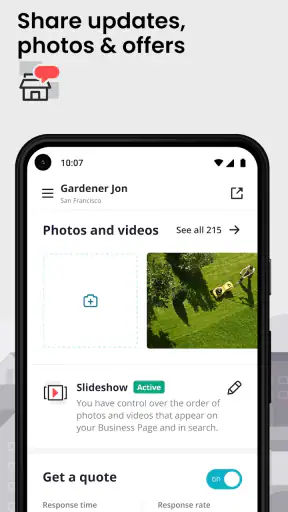
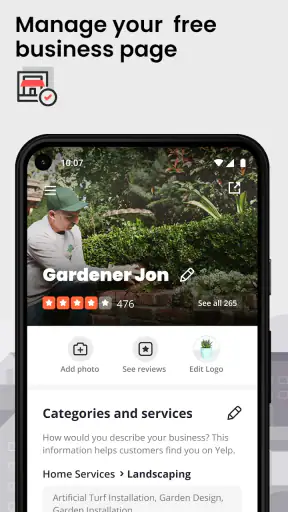
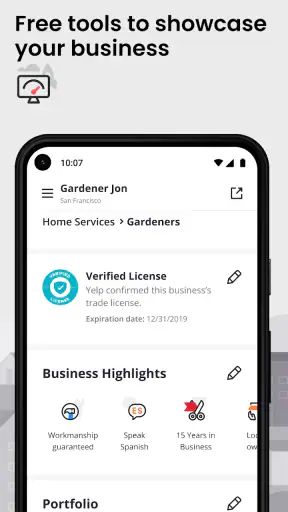
The most convincing part of the app is the connection between business information and customer conversation. Instead of waiting until you are back at a computer, you can use the phone to keep an eye on the details people see when they look up the business. That is especially valuable for restaurants, salons, repair services, shops, and other local businesses where a wrong detail can send someone to the wrong place or create an unnecessary phone call.
I like this kind of access because it encourages small, regular checks rather than occasional maintenance sessions. A listing is not something I would want to review only when there is a problem. Hours, contact details, service descriptions, and the general presentation all contribute to whether a potential customer decides to call or visit. Having those responsibilities close at hand makes it easier to notice an issue before it becomes a customer complaint.
The app also makes sense for owners who divide their time between the counter, the stockroom, client appointments, and errands. A desktop dashboard can be more comfortable for lengthy editing, but the phone is usually nearby when a customer interaction happens. That makes the mobile format particularly well suited to monitoring and responding, rather than to long administrative projects.
Review replies feel more useful when they are timely
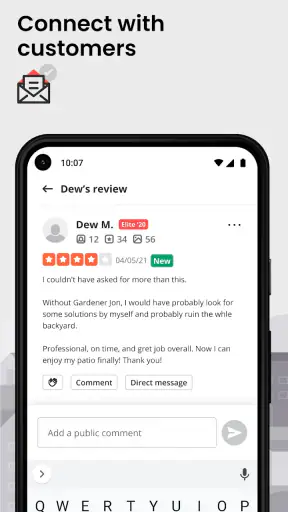
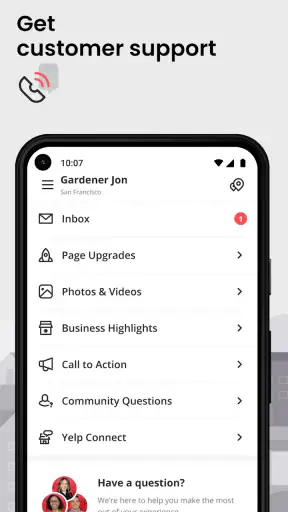
Customer reviews are where the app earns its place for many owners. Reading feedback on a phone is straightforward, but the real value is having a dedicated place to think through a response and send it without opening a browser or remembering to do it later. A timely, calm reply can show that the business is paying attention, especially when the review raises a specific service issue.
I would not use the app to fire off rushed replies while annoyed. The convenience cuts both ways: because the response box is always close, it is easy to answer too quickly. My preferred workflow is to read the review once, wait until I can separate the facts from the emotion, and then write a short response that acknowledges the customer without arguing in public. The app supports that habit, but it cannot supply the judgment.
There is also a useful difference between responding to praise and responding to criticism. A positive review may only need a warm, personal thank-you. A negative one may require checking what happened internally before saying anything. The mobile app is good for the communication step, while the investigation still belongs to the owner or manager. That division keeps expectations realistic.
Useful for a small team, but not a full operations hub
For a single-location business, the app can become a simple daily checkpoint. I can imagine an owner opening it in the morning to review recent activity, checking the listing before a busy period, and returning later to handle messages or reviews. That routine is more manageable than trying to remember every customer-facing platform separately.
Still, I would not confuse this with accounting software, a scheduling system, a point-of-sale tool, or a customer relationship database. Its focus is the Yelp side of the business. If you need inventory, staff permissions, detailed sales reports, appointment management, or a unified inbox covering several services, you will need other tools. The app may sit beside those systems, but it does not replace them.
That limitation is not necessarily a flaw. Focus can be helpful. A business owner opening this app knows that the task is public presence and customer feedback, not a sprawling collection of unrelated settings. The trade-off is that larger businesses may quickly outgrow a phone-first workflow if several people need coordinated access or if responses must follow a formal approval process.
Three workflows that make the app more valuable
One less obvious use is to treat the app as a pre-shift accuracy check. Before opening, I would review the listing with the mindset of a first-time visitor: Is the business information still correct? Does the description match what is actually available? Would a customer understand what to expect before calling? This takes less effort than dealing with confusion after someone has already arrived.
A second workflow is to separate monitoring from replying. Rather than answering every review immediately, I would scan new feedback, mark mentally which items need an internal check, and then return to write responses in a consistent tone. This avoids the common mistake of promising a fix before confirming what the business can really do.
A third is to use customer language as a recurring service audit. Reviews often reveal patterns that are easy to miss during daily operations. If several people describe the same confusing process, unclear instruction, or communication gap, the app becomes more than a response tool. It provides a convenient place to notice repeated friction and decide whether the business needs to change something offline.
The strongest reason to keep it installed is not speed alone; it is the habit of staying close to the customer-facing version of the business. Owners who check it thoughtfully can turn reviews into practical signals instead of treating them only as compliments or threats.
Where the experience becomes less comfortable
Phone-based management has natural limits. Editing or reviewing a lot of information on a small screen is slower than working at a computer, particularly when the business has many details to maintain. I would use the app for quick corrections and routine checks, but choose a larger screen for a substantial listing refresh or careful review of a long set of customer interactions.
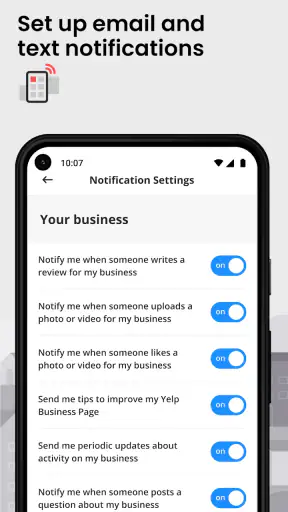
Another weakness is the emotional pressure of having public feedback immediately available. The app makes it easier to respond, but that does not mean every review deserves an instant answer. Owners who already find online criticism distracting may feel as though the business is always demanding attention. Notifications and frequent checking can become a source of stress if there is no clear routine.
The app is also less compelling when Yelp is not an important discovery channel for the business. If most customers arrive through referrals, a company website, another local directory, or a platform with stronger activity in the relevant area, the benefit of maintaining this particular presence may be limited. Installing a management app does not create demand by itself; it only helps manage the channel that is already there.
For multi-location companies, consistency can be another challenge. A phone is excellent for one person handling one location, but broader teams may need shared procedures, role separation, approval steps, and reporting across locations. I would be cautious about making this the central workflow for a large organization unless the team has already established who handles responses and how listing changes are checked.
How it compares with the usual alternatives
The obvious alternative is managing the same business presence through a mobile browser. A browser can be flexible, especially if you occasionally need to switch between several web tools, but a dedicated app feels more direct for repeated checks. I prefer the app when the task is routine and focused. The browser may be better when I am already doing broader website administration or need to move between several accounts.
A desktop dashboard is generally the better choice for detailed editing, long-form writing, and reviewing information side by side. Yelp for Business wins on immediacy rather than workspace. If I am standing outside the shop and notice an incorrect detail, the phone is convenient. If I am planning a full update with another manager, a computer is less tiring and easier to review.
Social media management tools can be stronger for publishing content and coordinating several networks, while this app is more narrowly centered on the Yelp business relationship. That narrower purpose is an advantage when reviews and listing accuracy are the priority. It is a disadvantage if you expect one app to handle every public channel.
All-in-one customer platforms may offer more extensive reporting, automation, and team controls. They can be a better investment for a growing company with complex processes. For an independent owner, however, their extra structure may feel excessive when the immediate need is simply to keep a local listing accurate and respond like a real person.
Who should use it regularly
I would recommend it most strongly to an owner-operator, a manager of a small local business, or a trusted staff member responsible for customer communication. It is a good match when the business receives meaningful attention on Yelp, when reviews influence buying decisions, and when the person managing the listing spends much of the day away from a desk.
It is also useful for someone who wants a clear boundary around online reputation work. A short morning check and a later response session can be more sustainable than constantly opening several social platforms. The app gives that work a defined home, which can make customer communication feel like a manageable responsibility rather than an endless stream of tabs.
I would be more selective for a large chain, an agency handling many clients, or a business that needs formal collaboration and detailed analytics. Those users may still find the app useful for quick checks, but they should not assume it will cover the coordination needs of a larger operation. Likewise, a business with very little Yelp activity may gain more from improving its core service, website, or booking process before adding another channel to monitor.
The age rating is Everyone, and the app is free, so the barrier to trying it is low. It runs on an operating system version of 9 or later. Those details make it accessible for many everyday business phones, though the practical question is not only whether it installs; it is whether the owner will actually maintain a reliable review and listing routine.
What the adoption numbers suggest, and what they do not
The app has passed one million installs, with an average rating of 3.7 from around twelve thousand ratings and about five thousand reviews. I read that as a sign of a useful but not universally effortless tool. There is enough adoption to show that it serves a real business need, while the middling score suggests that expectations and working styles matter.
That rating should not be treated as a verdict on every business. Someone who needs quick review access may value it more than someone looking for advanced reporting or team administration. The same focused design that feels clean to a solo owner can feel restrictive to a company expecting a complete management suite.
Version details and day-to-day expectations
The current version is 26.35.0-28263501. I would keep the app updated through the normal app-store process, especially for a business tool that handles public information and customer communication. Even without turning updates into a project, it is sensible to open the app after an update and quickly check that the main listing and review workflow still behave as expected.
My practical advice is to establish ownership before installing it. Decide who checks new feedback, who can change business details, and what kinds of complaints need an internal conversation first. Without that simple agreement, easy mobile access can lead to duplicated replies or inconsistent information. The app works best when it supports a process rather than becoming an unassigned responsibility.
My final recommendation
Yelp for Business is a focused, worthwhile app for keeping a Yelp listing and its customer conversations within reach. I appreciate that it addresses a real problem for local businesses: important public interactions often happen while the owner is nowhere near a computer. Its strongest qualities are convenience, immediacy, and the ability to turn review monitoring into a regular part of the workday.
Its limitations are equally clear. It is not a substitute for a complete business platform, a large-screen editing environment, or a multi-channel communication suite. It can also encourage impulsive replies if the owner does not create a sensible routine. Those are meaningful trade-offs, but they do not undermine its purpose.
My recommendation is straightforward: if Yelp matters to your business and you personally need to manage the listing while moving through the day, this free app is worth trying. Use it for accurate information, thoughtful responses, and spotting recurring customer issues. If you need complex team controls or broad business administration, keep it as a companion tool and choose a more comprehensive system for the rest. For the right owner, it is a practical connection between daily operations and the public experience customers see.


